The 48-team World Cup was supposed to dilute the magic. So far it has multiplied it
Bigger was meant to mean worse: more mismatches, less jeopardy, a tournament bloated by money. A week into the first 48-nation World Cup, the early evidence tells a more interesting story.
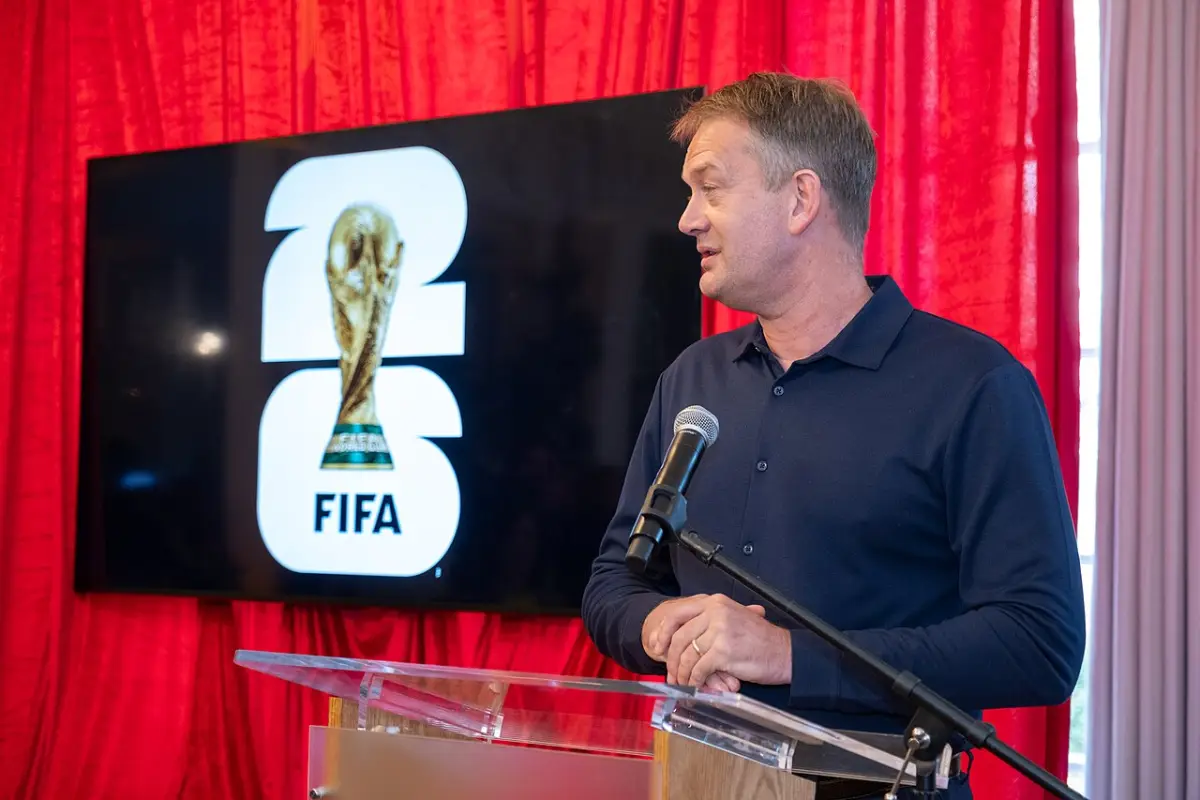
For nine years, the case against the 48-team World Cup wrote itself. FIFA was inflating its crown jewel for money, the argument went, padding the bracket with nations that had no business being there, guaranteeing a glut of one-sided thrashings that would drain the group stage of the jeopardy that makes it great. It was bigger for the sake of bigger, and bigger would mean worse. A week into the first edition of the expanded tournament, that prediction deserves a hard look, because the early evidence does not support it. If anything, it points the other way.
Start with the moment that should embarrass every person who sneered at the small nations. Curaçao, an island of roughly 150,000 people and the smallest nation ever to reach a World Cup, walked out against Germany and scored. Not a consolation in garbage time, but a real goal against one of the most decorated teams in the sport, the ball squirming past a scrambling German defence with the captain Joshua Kimmich involved in the chaos. Germany recovered, as Germany tends to, and Jamal Musiala produced the kind of finish that reminds you why he is one of the best in the world. But the scoreline is not the story. The story is that a country most pundits could not place on a map arrived on the biggest stage and refused to be a tourist.
The mismatch that never came
The central fear about expansion was competitive: forty more matches, the critics said, means forty more chances for a 5-0 procession. There have been some heavy wins, of course, including Germany eventually running up a comfortable margin. But the texture of the group stage has been far more competitive than the doom-mongers promised. The debutants have not been there to make up the numbers. Cape Verde took their place in a group with Spain and Uruguay and did not fold. Jordan and Uzbekistan, the other first-timers, arrived carrying the hopes of entire confederations that had spent decades locked out by a qualification map skewed towards Europe and South America.
That is the part the cynics consistently undersell. For all the talk of diluting quality, the expansion has done something the old 32-team format structurally could not: it has made the World Cup look like the world. When Arsene Wenger, now FIFA's head of global football development, defended the change as a step towards making the game "truly global", it was easy to dismiss as corporate spin. A week in, it reads less like spin and more like an accurate description of what is actually happening on the pitch.
The money question is real, but it is not the whole story
None of this means the critics were wrong about motive. Of course the expansion is commercially driven. More teams means more matches, more broadcast inventory, more host cities selling more tickets across the United States, Canada and Mexico. FIFA does not do anything on this scale without counting the revenue first, and anyone who pretends otherwise is not paying attention. The honest position is that money and merit are not mutually exclusive. A decision can be motivated by greed and still produce a better, more inclusive tournament. Both things are true at once, and the early group stage is the proof.
Here is how the whole field looks as the opening round plays out across all twelve groups of this expanded tournament.
What the table cannot show is the feeling. There is a particular energy to watching a nation experience a World Cup for the first time, the players filming the stadium on their phones, the travelling support outnumbered but deafening. The old format rationed that feeling to the same two dozen countries. The new one hands it out far more widely, and the tournament is richer for it, not poorer.
The legitimate worry that remains
I will not pretend the format is flawless, because one structural flaw is real and worth watching. Twelve groups of four, with the best eight third-placed teams advancing, creates a knockout maths problem: in the final round of group games, some teams will know exactly what result they need, and a few dead-rubber or mutually-convenient scorelines are almost inevitable. The 1982 ghost of West Germany and Austria still haunts any format where two sides can both progress with a particular result. FIFA has staggered kickoff times to mitigate it, but the risk has not been designed out entirely, and the back end of this group stage is where the format will face its sternest test.
That is a fair criticism, and it is a different one from the lazy "it will be boring" prediction that has already aged badly. The expansion's danger was never the quality of the football; the debutants have answered that. The danger is the incentive structure in the final 36 group matches. Judge the format there, not on the strawman of one-sided early games that have largely failed to materialise.
The verdict, for now
It is one week. Tournaments turn, and a knockout stage full of cagey, fearful football could yet vindicate the sceptics. But the opening exchanges have been a quiet rebuke to almost everything that was said about the 48-team idea. The minnows have bitten. The debutants have belonged. The matches have been competitive far more often than not. And a World Cup that was supposed to feel diluted has, so far, felt expanded in the best sense of the word: more nations, more stories, more of the global game actually present at its global showpiece.
The magic was meant to thin out. Instead there is simply more of it to go around. That is not the tournament the critics warned us about, and it is a far better one than they feared.